
From Labs to Life: PhD Journeys Unplugged
From coffee breaks to career tips, students explored the twists and turns of the PhD journey with those who’ve walked the path before them.
During their 20th Antarctic expedition to the Czech J.G. Mendel Station on James Ross Island, young scientists experienced an average weight gain. This surprising finding comes from body measurements and 3D full-body and facial scans conducted before and after the expedition by Masaryk University, Faculty of Science anthropologists using the A.D.A.P.T. software platform.

According to Dominik Černý, a researcher from the Department of Anthropology at Masaryk University, Faculty of Science, the results showed that weight changes among the expedition members were highly variable. Younger members tended to gain weight, while older members generally lost weight.
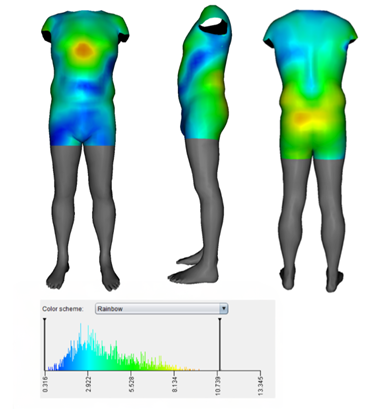
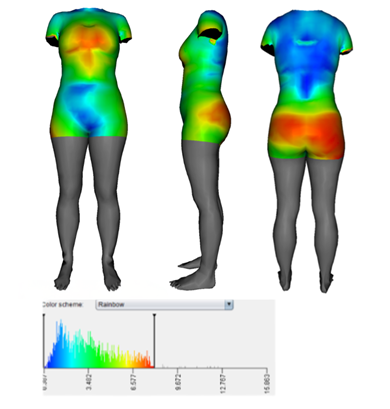
Figure: Color map showing the differences between the models before and after shipping, projected on the model. Source: Archive of Department of Anthropology MUNI SCI
Interestingly, those who reported a healthier lifestyle, regular exercise, and a balanced diet before the expedition gained weight during the expedition, while others generally lost weight. Weight changes varied, with weight loss ranging from approximately 1–2 kg and weight gain from 3–5 kg, depending on individuals' overall body weight.
3D scanning data indicated that those who gained weight showed changes primarily in the hip and buttock areas, regardless of sex. In contrast, those who lost weight exhibited changes mainly in the abdominal area. This is attributed to dietary changes during the stay at the station and the inability to engage in physical activity during transport to and from the station.

The primary research tasks for the anthropologists included determining the body measurements of the expedition members, comparing their dimensions with clothing size charts and previous studies of the Czech population, and assessing changes in body shape and composition before and after the expedition.


The A.D.A.P.T. software platform provides data on up to 40 body measurements and the body composition of the contemporary Czech population. Such comparable current data had not been available to this extent and form before. Besides research purposes, A.D.A.P.T. is a unique data source for designers and manufacturers of protective gear and products intended for human use. The database represents a sample of hundreds of individuals from the Central European population aged 18 to 87, with varying body compositions and proportions (BMI ranging from 16 to 41) and a balanced representation of both men and women. A.D.A.P.T. includes supplementary demographic data, detailed 3D body models in three postures, 3D facial models, and body and subcutaneous fat models.
From coffee breaks to career tips, students explored the twists and turns of the PhD journey with those who’ve walked the path before them.

The Czech national team achieved an extraordinary triumph at the International Earth Science Olympiad (IESO 2025), a prestigious competition for high school students from around the world. The event, held in Jining, China, from August 7 to 17, 2025, tested both theoretical knowledge and practical skills across disciplines such as geology, hydrology, climatology, astronomy, and environmental science. In addition, the competition evaluated research capabilities and teamwork.

